Beaver War(s)
Tribal hegemony destroyed the northern tribes

This series is on the foundations and Founding Fathers of the United States. Follow this link to the first article in the series.
The Beaver Wars (also known as the Iroquois Wars or the French and Iroquois Wars) were a series of intermittent conflicts fought during the 17th century throughout the Saint Lawrence River valley and the Great Lakes region, pitting the Iroquois with the active support and arming by the Dutch and English against the Wendat.
Full disclosure - the Wendat were my mother’s ancestral tribe, so I have opinions about this.
The Wendate were northern Algonquians allied with the French against the Iroquois, the large and aggressive tribal confederation to the north of New England. This makes them an outlier as Alongonquians usually allied with the English. History records there were several legendary Wendate warriors and they were also later known for their diplomacy.
As a result of the Beaver Wars conflict, the Iroquois destroyed several confederacies and tribes through warfare: the Wendat (called Huron by the French), Erie, Neutral, Wenro, Petun, Susquehannock (Conestoga), Mohican (yes, those Mohicans) and northern Algonquins, were all loosely allied together against the Iroquois. Defeated and dispersed, their surviving victims fled to neighboring tribes and sometimes assimilated into colonial society. The extreme brutality and genocidal nature of the mode of Iroquoian warfare had a profound effect on the tribes of the Northwest Territories.
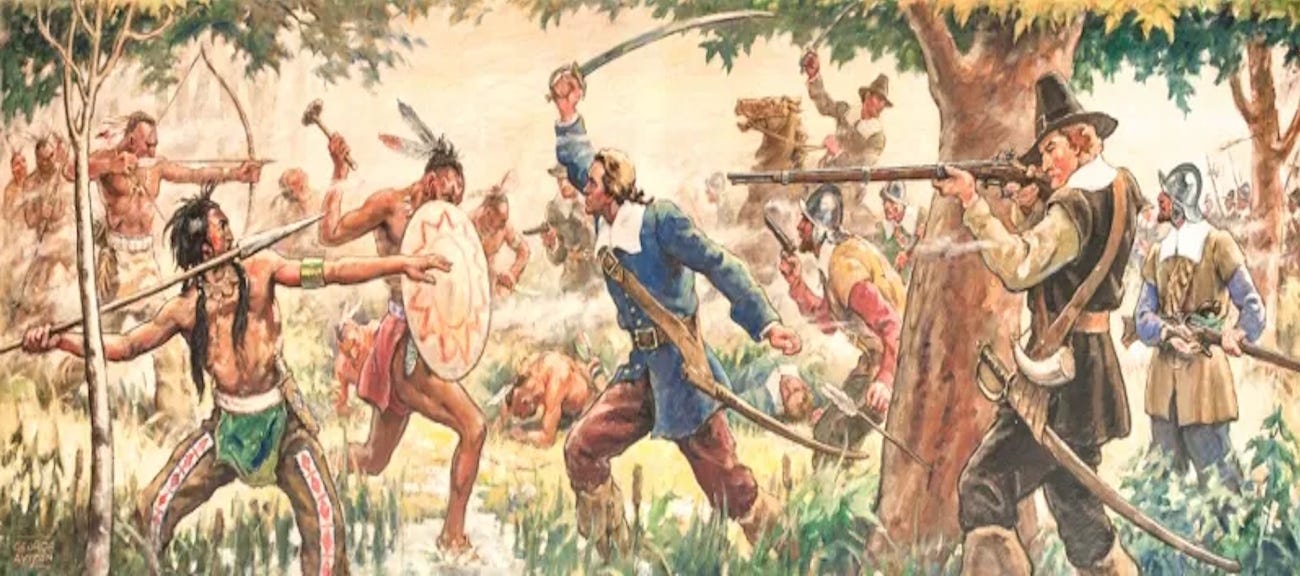
Much like the Narragansett and Pequot to the south, the Iroquois sought to expand their territory to monopolize the fur trade with European markets. They originally were a confederacy of the Mohawk, Oneida, Onondaga, Cayuga, and Seneca tribes inhabiting the lands in what is now Upstate New York along the shores of Lake Ontario east to Lake Champlain and Lake George on the Hudson River, and the lower-estuary of the Saint Lawrence River.
The Iroquois Confederation led by the Mohawks mobilized against the largely Algonquian-speaking tribes and Iroquoian-speaking Wendat (Huron) and related tribes of the Great Lakes region after their Dutch and English trading partners supplied them with firearms. Not to be outdone, the Algonquians and Wendat were backed by their French trading partner, who thought arming the Indians might not work out well for them.
Understand, the Indians didn’t get the idea of genociding one another from their European partners. They already had this idea and the Europeans just helped them pull it off.
A Brief History
In the 1540s, (about 80 years before the English arrived) French explorer Jacques Cartier encountered American Indians in the region near the mouth of the Saint Lawrence River estuary, although French explorers and fishermen had traded furs there a decade before. Cartier wrote of encounters with the St. Lawrence Iroquoians who occupied several fortified villages, and he noted some of the tribes were at war with each other. This was likely the Wendat and the Mohawk, but history doesn’t record this speculation.
Wars and politics in Europe distracted French efforts to colonize the St. Lawrence Valley until the beginning of the 17th century, when the French explorer Samuel de Champlain founded Quebec in 1608 (still two decades before the English arrived). When the French returned to the area, they found the fortified villages abandoned and devoid of inhabitants in that part of the upper river valley, though the Iroquois and the Wendat used it as hunting ground. The causes for this depopulation remain unclear, although some anthropologists and historians suggested the Mohawk Nation of the Iroquois Confederacy destroyed or drove out the St. Lawrence Algonquins.
My mother’s tribe doesn’t know where their exact ancestral homeland was. They believe it was an island or peninsula in the St. Lawrence Waterway. Tribal history only goes back to the early 17th century. But a part of oral history is that another tribe attacked them and pushed them off “the back of the turtle”.
Before 1603, Champlain formed an alliance against the Iroquois, as he decided the French wouldn’t trade firearms to them. The northern tribes provided valuable furs to the French, and Champlain felt the Iroquois interfered with that trade. He probably wasn’t wrong in this, but his animosity caused one of the first major hostilities in the area. Champlain admitted he intiated the first battle with the Iroquois in 1609, when he and his Wendat and Algonquin allies fought a pitched battle against the Mohawks on the shores of Lake Champlain. They won when the Mohawk withdrew in disarray.
In 1610, Champlain and his French companions helped the Algonquins and the Wendat defeat a large Iroquois raiding party. In 1615, he joined a Wendat raiding party and took part in a siege on an Iroquois town south of Lake Ontario in New York. The attack ultimately failed, and Champlain was injured.
Dutch competition
In 1610–1614, the Dutch established a series of seasonal trading posts on the Hudson and Delaware rivers, including one on Castle Island at the eastern edge of Mohawk territory near Albany. This gave the Iroquois direct access to European markets via the Mohawks. The Dutch trading efforts and eventual colonies in New Jersey and Delaware soon established trade with the coastal Delaware tribe (Lenape) and the more southerly Susquehannock tribe. The Dutch founded Fort Nassau in 1614 and its 1624 replacement Fort Orange (both at Albany) which removed the Iroquois’ need to rely on the French and their allied tribes for access to European traders. The Dutch supplied the Mohawks and other Iroquois with guns. In addition, the new post offered valuable tools the Iroquois could trade for animal pelts. They began large-scale hunting for furs to satisfy demand for European goods among their peoples.
Conflict began to grow between the Iroquois Confederacy and the tribes supported by the French. The Iroquois inhabited the region of New York south of Lake Ontario and west of the Hudson River. Their lands were surrounded on all sides by Algonquian-speaking tribes. These were all traditional enemies, including the Shawnee to the west in the Ohio Country, the Neutral Nation and Wendat confederacies on the western shore of Lake Ontario and southern shore of Lake Huron to the west, and the Susquehannock to their south. These tribes had historically competed with and sometimes warred against, the Iroquois’s five-nation confederacy.
Beaver Wars begin
In 1628, the Mohawks defeated the Mohicans (yes, those Mohicans), pushing them west of the Hudson River and establishing a monopoly of trade with the Dutch at Fort Orange, New Netherland (Albany, New York). The Susquehannocks, well-armed by Dutch traders, effectively reduced the strength of the Delawares and managed to win a protracted war with Maryland colonists. By the 1630s, the Iroquois had become fully armed with European weaponry through their trade with the Dutch. They used their growing expertise with the rifle in their continuing wars with the Algonquins and Wendat. The French outlawed the trading of firearms to their Indian allies, though they occasionally gave rifles as gifts to individuals who converted to Christianity. When the Algonquian, Mahican, Innu and Wendat allied with the French, the Iroquois quickly attacked them directly.
You can’t really blame the Algonquian-allied tribes for seeking a stronger ally when faced with such an aggressive neighbor.
The expansion of the fur trade with Europe brought a decline in the beaver population in the Hudson Valley. The growing mid-17th century scarcity of the beaver in Iroquois territory accelerated the wars. as the center of the fur trade shifted north to the colder regions of southern Ontario, controlled by the Neutral and Wendat tribes who were close trading partners with the French.
As the beaver population declined, the Iroquois began to conquer their smaller neighbors. They attacked the Wenro in 1638, seizing all of their territory. Survivors fled to the Wendat, considered legendary warriors, for refuge. The Wenro had served as a buffer between the Iroquois and the Neutral and Erie tribes. Considerably more powerful than the Iroquois, the combined Neutral and Erie tribes were a formidable foe. The Iroquois, with Dutch encouragement, turned their attention northward. The Dutch had made a good living trading furs with the Iroquois, but with the population of beaver declining, their trading posts were struggling.
In 1641, the Mohawks traveled to New France to propose peace with the French and their allied tribes, asking for a trading post in Iroquoia. Governor Montmagny rejected this proposal because it would imply abandonment of their Wendat allies.
Defeat of the Wendat
In the early 1640s, the Iroquois repeatedly attacked frontier Wendat villages along the St. Lawrence River, trying to disrupt trade with the French. In 1645, the French called the tribes together to negotiate a treaty to end the conflict, and Iroquois leaders Deganaweida and Koiseaton traveled to New France to take part in the negotiations. The French agreed to most of the Iroquois demands, granting them trading rights in New France. The next summer, a fleet of 80 canoes traveled through Iroquois territory carrying a large harvest of furs to be sold in New France. When they arrived the French refused to purchase the furs, designating the Wendat as middlemen. Outraged, the Iroquois resumed the war, which brought the French into direct involvement in the conflict.
The Wendat and the Iroquois had an estimated 25,000 to 30,000 members each. In 1647, the Wendat and Susquehannocks formed an alliance to counter Iroquois aggression. Their combined warriors greatly outnumbered the Iroquois. The Wendat tried to break the Iroquois Confederacy by negotiating a separate peace with the Onondaga and Cayuga tribes, but negotiations broke down. There were several small skirmishes between the tribes, but a more significant battle occurred in 1648 when the two Algonquin tribes passed a fur convoy through an Iroquois blockade, inflicting high casualties on the Iroquois.
In the early 1650s, the Iroquois began attacking the French themselves. After a failed peace treaty negotiated by Chief Canaqueese, Iroquois moved north into New France along Lake Champlain and the Richelieu River, attacking and blockading Montreal. By 1650, they controlled the area from the Virginia Colony in the south up to the St. Lawrence. In the west, the Iroquois drove the Algonquin-speaking Shawnee from the Ohio territory and seized control of the Illinois region as far west as the Mississippi River. In January 1666, the French invaded the Iroquois territory and took Chief Canaqueese prisoner. In September, they proceeded down the Richelieu but were unable to find an Iroquois army, so they burned their crops and homes. Many Iroquois died from starvation in the following winter.
During the following years, the Iroquois strengthened their confederacy to work more closely and create an effective central leadership. The five tribes ceased fighting among themselves by the 1660s, coordinating military and economic plans, and they increasing their power as a result.
Indian raids weren’t constant, but they terrified the inhabitants of New France. In 1648, the Dutch authorized selling guns directly to the Mohawks rather than through traders, and promptly sold 400 to the Iroquois. The Confederacy sent a thousand newly armed warriors through the woods to Wendat territory just at the onset of winter. Launching a devastating attack into the heart of Wendat territory, they destroyed several key villages, killed many warriors, and took thousands of people captive to serve as slaves for the Mohawk tribe. The surviving Wendat fled, dispersed from their territory, some taking refuge with the Jesuits at Quebec to be assimilated into European culture while others were first enslaved, then adopted by the Iroquois. Other Wendat joined the Petun (Tobacco) nation to form the Wyandot tribe. The Ottawa tribe temporarily halted Iroquois expansion further northwest, but the Iroquois controlled a fur-rich region and had no more tribes blocking them from the French settlements in Canada.
Diseases had taken their toll on the Iroquois and neighbors in the years preceding the war, and their populations had drastically declined. To replace lost warriors, they worked to integrate many of their captured enemies by adoption into their own tribes. They invited Jesuits into their territory to teach those who had converted to Christianity. This would eventually work to their disadvantage, but initially, it provided them with expanded and expendible forces to press their genocidal war.
The Iroquois attacked and defeated the Neutrals in 1650-1651. They had less success with their attack of the Erie tribe in 1654. It took two years for them to destroy the Erie confederacy. Often the Iroquois were greatly outnumbered by the tribes they subdued, but Dutch firearms gave them an edge other tribes didn’t possess.
Despite these battles looking like massive successes for the Iroquois, such victories lead to their eventual downfall. The Iroquois took far more captives than they could assimilate, which led to divisions and factions within the nation. Many captives held onto their prior beliefs instead of adopting Iroquoian language and ideas. Large divisions embraced a French alliance, migrating north towards Montreal to trade with the French. The Iroquois accidentally aided the French through their destruction and captivity of the Wendat.
French Counterattack
The Iroquois continued to control the countryside of New France, raiding to the edges of the walled settlements of Quebec and Montreal. In May 1660, an Iroquois force of 160 warriors attacked Montreal and captured 17 French colonists. In 1661 and 1662, the Iroquois made several raids against the Abenakis who were allied with the French. The French Crown ordered a change to the government of Canada, putting together a small military force made up of French, Wendat, and Algonquins to counter the Iroquois raids, but the Iroquois attacked them when they ventured into the countryside. Only 29 of the French survived and escaped; five were captured and tortured to death by the Iroquois. Despite their victory, the Iroquois also suffered a significant number of casualties, and their leaders began to consider negotiating for peace with the French.
The tide of war began to turn in the mid-1660s with the arrival of the Carignan-Salières Regiment, a unit of roughly a thousand regular troops from France, the first group of professional soldiers in Canada. The government of New France authorized direct sale of arms and other military support to their Algonquin Indian allies. In 1664, the Dutch allies of the Iroquois lost control of their colony of New Netherland to the English. In the immediate years after the Dutch defeat, European support of the Iroquois waned, as the Onondaga, Seneca and Cayuga reached a peace settlement with the French.
The Mohawk and Oneida tribes were among the holdouts in forging peace treaties. In January 1666, Governor Daniel de Rémy de Courcelle attempted to invade the Mohawk homeland. The French soldiers were ill-equipped for snow and cold, so the first attempted invasion proved to be a brief skirmish. A second invasion in September 1666, led by Alexandre de Prouville de Tracy reached the Mohawk villages in mid-October. The villages had been hastily abandoned. Tracy ordered the longhouses and crop fields destroyed, and the expedition returned to New France. A peace settlement was reached with the Mohawk and Oneida in July 1667.
Once peace was achieved with the French, the Iroquois returned to their westward conquest in their continued attempt to take control of all the land between the Algonquins and the French. Eastern tribes such as the Lakotas were pushed across the Mississippi onto the Great Plains in the early 18th century, where they adopted the horse culture and nomadic lifestyle for which they later became known. Other refugees flooded the Great Lakes area, resulting in a conflict with existing tribes in the region. In the Ohio Country, the Shawnee and Miami tribes were dominant. The Iroquois quickly overran Shawnee holdings in central Ohio, forcing them to flee into Miami territory. The Miamis were a powerful tribe about to forge a confederacy of their neighboring allies, including the Pottawatomie and the Illini confederation who inhabited Michigan and Illinois. The majority of the fighting was between the Anishinaabeg Confederacy and the Iroquois Confederacy.
The lack of firearms caused the Algonquin tribes the greatest disadvantage. Despite their larger numbers, they weren’t centralized enough to mount a united defense and were unable to withstand the better-armed Iroquois. Several tribes ultimately moved west beyond the Mississippi River, leaving much of the Ohio Valley, southern Michigan, and southern Ontario depopulated. Several Anishinaabe forces numbering in the thousands remained to the north of Lakes Huron and Superior, and they were later decisive in rolling back the Iroquois advance. From west of the Mississippi, displaced groups continued to arm war parties and attempt to retake their land.
With the tribes destroyed to the north and west, the Iroquois turned their attention southward to the Susquehannock leading to the Susquehannock negotiating Articles of Peace and Friendship with Maryland. The Maryland assembly authorized armed assistance for the Susquehannock, which included muskets, lead and powder. Despite suffering a smallpox epidemic in 1661, the Susquehannock easily withstood a siege by 800 Seneca, Cayuga and Onondaga in May 1663, and destroyed an Onondaga war party in 1666. War between the Iroquois and Susquehannock continued intermittently until 1674 when the Maryland colonists changed their Indian policy, negotiated peace with the Iroquois, and terminated their alliance with the Susquehannocks. Most historians believe the Iroquois Confederacy inflicted a major defeat on the Susquehannock around 1674. In 1675, the Susquehannock moved south into Maryland. Later that year the militias of Virginia and Maryland besieged the Susquehannock fort, assassinating the Susquehannock chiefs during a parley. The survivors of the siege were eventually absorbed by the Iroquois.
Beginning in the 1670s, the French began to explore and settle the Ohio and Illinois regions from the Mississippi and Ohio rivers, and they established the post of Tassinong to trade with the western tribes. The Iroquois destroyed it to retain control of the fur trade with the Europeans. The Iroquois also drove the Mannahoac tribe out of the northern Virginia Piedmont region in 1670, and they claimed the land by right of conquest as a hunting ground. The English acknowledged this claim in 1674 and again in 1684, but they acquired the land from the Iroquois by a 1722 treaty.
During a raid into the Illinois Country in 1689, the Iroquois captured numerous prisoners and destroyed a sizable Miami settlement. The Miami asked for aid from others in the Anishinaabeg Confederacy, and a large force gathered to track down the Iroquois. Using their new firearms, the Confederacy laid an ambush near South Bend, Indiana, and they attacked and destroyed most of the Iroquois party, and a large part of the region was left depopulated. The Iroquois were unable to establish a permanent presence, as their tribe was unable to colonize the large area, and the Iroquois’ brief control over the region was lost. Many of the former inhabitants of the territory began to return. The Shawnee proclaimed the Wyandot (what was left of the Wendat combined with the Petun people) “elder brothers” and allowed them to settle on Shawnee land. They would continue to be known as legendary warriors and wise diplomats until after the American Revolution.
Both Algonquian and Iroquoian societies were greatly disrupted by these wars. The conflict subsided when the Iroquois lost their Dutch allies in the colony of New Netherland after the English took it over in 1664, along with Fort Amsterdam and the town of New Amsterdam on the island of Manhattan. The French then attempted to gain the Iroquois as an ally against the English, but the Iroquois refused to break their alliance, and frequently fought against the French in the 18th century. The Anglo-Iroquois alliance would reach its zenith during the French and Indian War of 1754, which saw the French being largely expelled from North America.
Analysis
The Beaver War, ranging down into Maryland and New York, put pressure on New England Indian tribes, resulting in increased hostilities.
Firearms became an important tool in North America and the tribes that had them became the most powerful.
The Indians were already fighting among themselves and, while Europeans certainly changed the balance of power by give the Iroquois rifles, these rivalries existed a long time before Europeans arrived on these shores.
We need to get away from the delusion of North American Indians as “peaceful children of nature” manipulated by the more sophisticated Europeans to do things they never would have done without their presence. The Iroquois thought their neighbors should bow to them before they ever met the first French trapper. The Wendat thought Europeans should bow to them as soon as they met one. Both were killing their neighbors without any help from outsiders because they were in a struggle for resources in a finite world. The Europeans thought the tribes would be impressed with their greater sophistocation and adopt European ways of doing things. Sometime intepreters dealt falsely between two groups for their own purposes. It was a rare settler who followed Roger Williams’s example of learning the local language and negotiating for the land they wanted to use. Indians claimed a lot of land they weren’t using and it seemed fair to the settlers to put it into production. Sometimes sachems (who didn’t own the land) violated the treaties they made for the gifts the settlers provided. Other times, the women (who did own the land (at least among the Wendat and Shawnee)) found out about these arrangements and told other sachems to reassert their claim to the land, which often involved killing frontier families. Europeans didn’t even know they should have been talking to the women.
These attitudes informed the conflicts between tribes and between races. Colonial settlement might have exascerbated the tensions, but they weren’t the origin of them. Those tensions were there a long time before Europeans arrived on these shores.
You done did good young lady!
I'd lean more towards the new kids in town, Dutch, French, et al, rather than tribal hegemony which was already, always, there destroyed or diminished the northern tribes but your narrative and timeline a logical, concise delightful read.