Cary's Rebellion
Politics destroys freedom

This series is on the foundations and Founding Fathers of the United States. Follow this link to the first article in the series.
It’s amazing how much politics shaped the American colonies, and no doubt led to distrust of government authorities by those who had been hurt by politicians, or experienced their incompetance
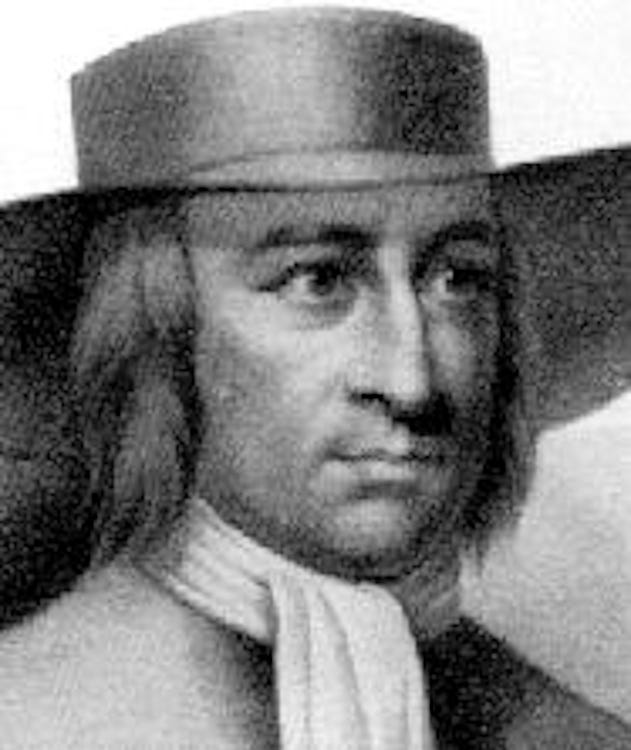
Cary’s Rebellion was a 1711 uprising against the Deputy Governor of north-Carolina led by Thomas Cary, who refused to give up his governorship to Edward Hyde as part of a long-standing tension between religious and political groups in northern Carolina, generally divided between the Quaker party (Cary) and the Church of England party (Hyde).
Background
In 1711, the Province of Carolina was technically a single entity which encompassed all the land from Spanish Florida to the Colony of Virginia. However, transportation between the northern parts and the southern seat of the provincial government in Charleston was very difficult. In the late 17th century, the provincial government appointed a deputy governor for the northern section. Because of the distance from the capital and communications challenges, he was given significant autonomy.
Early in its history Carolina provided for religious freedom, making it an attractive destination for Quakers who were persecuted in England and parts of the colonies. Quakerism’s founder George Fox visited the Albemarle Settlements in the very northern part of Carolina in 1672.
In many ways, Carolina is another example of a failure of religious “liberty”. In the succeeding years, Quakerism grew in the area and came to dominate the government, including the appointment of Quaker John Archdale as Governor of Carolina in 1694. In 1699, the crown appointed Henderson Walker as Deputy Governor of northern Carolina. A devout Anglican, he pushed through reforms which established the Church of England as the official religion of the state and passing the Vestry Act, imposed a tax on residents, no matter their faith, to support the official church.
You can see where this would be a problem for Quakers, who had no church buildings.
During Walker’s tenure, Queen Anne assumed the English throne, which required a renewal of the oaths by colonial officers. Quakers, as a tenet of their faith, didn’t swear oaths but had previously proven their loyalty by affirming the crown’s jurisdiction. This practice was disallowed under Queen Anne and all Quakers lost their positions. Over the next decade the distinction between the Quaker party and the Church party grew more entrenched.
Cary’s Governorship
Thomas Cary was the stepson of the former Governor of Carolina and Quaker John Archdale. Upon his appointment as Deputy Governor of the North Carolina region, Cary supported the Church Party and continued to keep Quakers out of the government by strictly enforcing the oath requirement. The Quakers and some disaffected Anglicans sent a representative to the Lords Proprietors of Carolina in England who removed Cary from the governorship. William Glover took over as Acting Deputy Governor, but continued the oath policy of Queen Anne.
In 1707, Cary returned, this time supporting the Quaker dissenters against Glover and also espousing the regional interests of the Pamlico Sound town of Bath against the Albemarle government which centered on the region near present-day Edenton.
In 1708, Cary and his supporters managed to oust Glover in an Assembly election. Glover fled to Virginia and claimed Cary threatened his life (which seems unlikely for a Quaker, but they’re human too). Meanwhile, Cary removed the oath requirement and restored Quakers to the government. From 1708 to 1710, Cary and the Quakers dominated the government. Cary also lowered the quit-rents (land rents exchanged for the royal land grants) for Bath County. Not endorsed by the Lords Proprietors, Cary’s government had no official legal standing.
Rebellion
Though “Cary’s Rebellion” can refer to the entire period from the ousting of Glover, it is generally used only for the period in 1711 after the Lords Proprietors chose Edward Hyde to take over the role of Deputy Governor, when Cary resisted his appointment. Hyde arrived in North Carolina in January 1711, bearing letters from the Lords Proprietors, expecting to receive his full, official commission from the Governor of Carolina when he arrived. The governor had died, so Hyde’s claim to the Deputy Governorship wasn’t technically perfected. He had a letter of delegation that referenced a dead guy.
Cary and the Quaker party were at first willing to allow Hyde to take over, until Hyde began to clearly side with the Anglican party. Then Cary refused to recognize Hyde until he produced his official commission. In the absence of that, he claimed he, Carey, was still the legal governor.
Hyde declared Cary to be in open rebellion and assembled an armed force of around 150 men to go to Bath to arrest him. Cary fled from his home to a nearby plantation which had been fortified and armed with cannons and several dozen of Cary’s supporters. On May 29, after failing to reach an agreement with Cary, Hyde decided to attack this fortified position. He and his men were beaten back after a short battle. On June 30, 1711, Cary—with his armed brigantine—began an attack on Hyde and his council at the home of Colonel Thomas Pollock on the Chowan River. Hyde’s followers consisted of 60 men and two cannon. Affairs looked dark for them when two strong landing parties from the brigantine headed for shore. But, a lucky shot from one of the cannon severed the brigantine’s mast and so frightened Cary’s forces they cut their anchor and sailed away. Cary regrouped and fortified a small island in the Pamlico Sound and began to rearm his followers. They then sailed to mainland Carolina and met Hyde’s force face-to-face. A fierce battle broke out.
Quakers are generally pacifists so it’s assumed few Quakers took part in the violence themselves so theoretically Cary’s force was made up of Bath County men and non-Quaker dissenters. It is important to realize this had less to do with religion than it had to do with politics.
Governor Alexander Spottswood of Virginia decided to come to the aid of Hyde, organizing a militia and dispatching a contingent of Royal Marines who stationed on the Chesapeake. With the arrival of an organized military force representing the official power of the crown, Cary’s forces disbanded and Cary himself fled. He was arrested and sent to England for trial though he was released after a year and returned to live out his life in Bath without further incident.
Aftermath
During the period from 1708 to 1711, the disputed government severely weakened the position of the colonists in northern Carolina. The Tuscarora War began in September 1711 and the chaos and dissension the Cary Rebellion wrought impeded colonial response, though a drought and yellow fever epidemic also played a role. The Cary rebellion also represented the end of the role of Quakers in North Carolina governance. After the rebellion they were effectively excluded from politics.
Thus Carolina represents a failure of religious freedom in the American colonies.