Charles Wesley
A Light in the Forest

This is series is on the foundations and Founding Fathers of the United States. Follow this link to the first article in the series.
Charles Wesley (1707–1788) has sometimes been referred to as “the forgotten Wesley.” Though famous in his own right, Charles Wesley is often overshadowed by his older brother, John, considered the founder of the Methodist denomination. Charles established his own legacy as the author of some of the most memorable and lasting hymns of the church. Some of his 8,989 hymns include “Hark! the Herald Angels Sing,” “O for a Thousand Tongues,” “Christ the Lord Is Risen Today,” and “Jesus, Lover of My Soul.
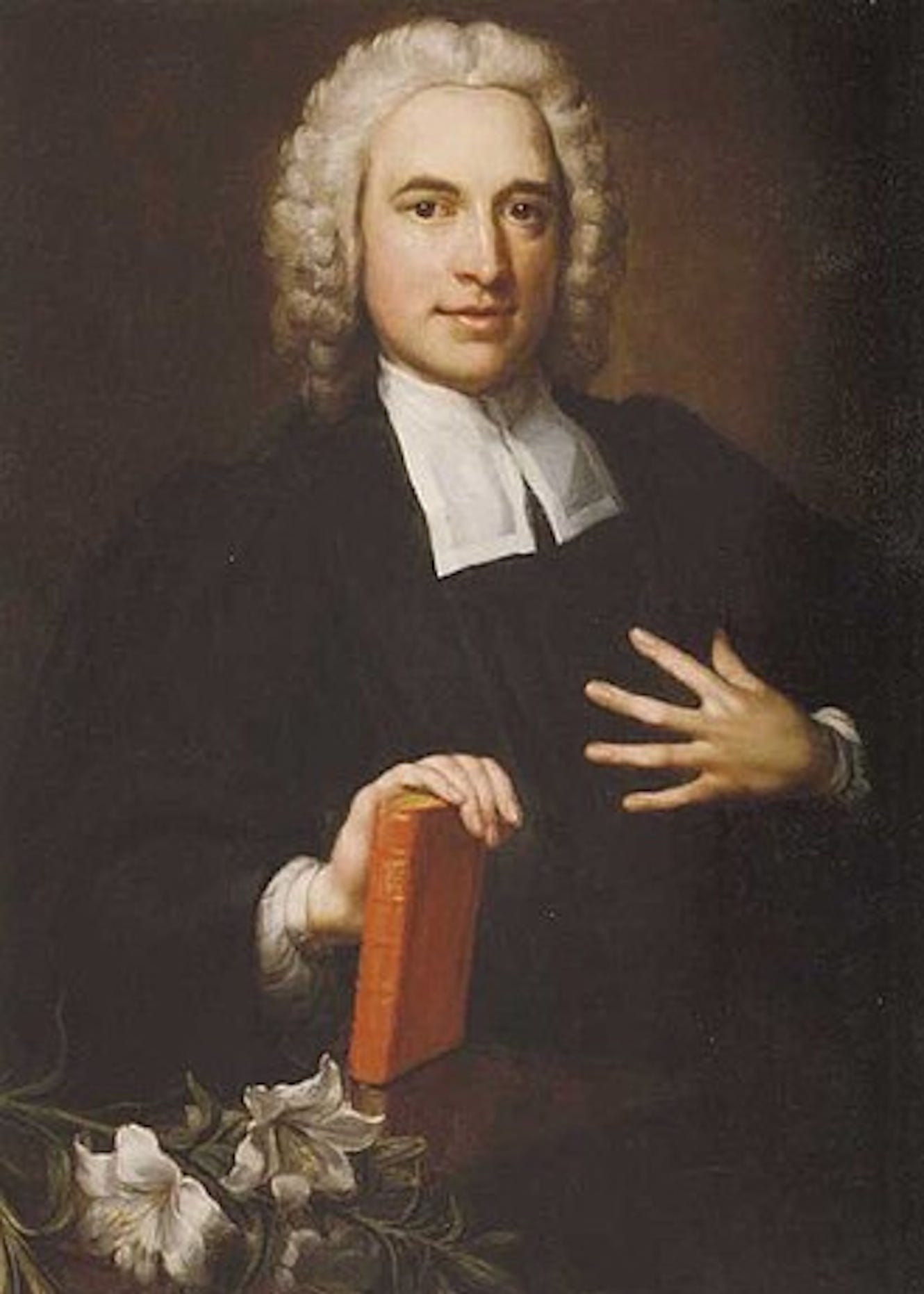
”
Charles was born prematurely in 1707 as the eighteenth of 19 children born to Samuel and Susannah Wesley. Only ten of those children lived to adulthood, and it looked as though Charles wouldn’t survive infancy. As an infant, he lay ill for weeks, wrapped in a wool blanket. But God’s hand was upon him, and he lived, soon joining his brothers and sisters in their daily studies of Greek, Latin, and French taught by Susannah. He then spent 13 years at Westminster in his native England, followed by another nine years at Oxford where he earned a master’s degree.
While at Oxford, Charles was bothered by the worldly atmosphere. In response, he and a handful of classmates formed what other students called the “Holy Club.” Together, Wesley and his friends observed communion weekly and held themselves to a rigorous schedule of spiritual pursuits including rising early, Bible study, and prison ministry. Because of this strict, self-imposed schedule, peers began calling them “Methodists.” The Wesleys’ future colleague, George Whitefield, joined the group.
After graduation in 1729, Charles Wesley, an Anglican, was ordained into the ministry in 1735, as was his brother John, and the two Wesley brothers set out to evangelize the colony of Georgia in America. Charles was appointed Secretary of Indian Affairs by Georgia’s royal governor, then traveled as chaplain to the garrison on St. Simon’s Island. He was largely rejected by the settlers and in July of 1736 he was charged with returning paperwork to England. He never returned to Georgia.
Chastened by his failure, Charles dove more deeply into the Scriptures for his own spiritual nourishment, instead of using Bible reading as a discipline or a means by which he could earn God’s favor. It was after reading Martin Luther’s commentary on Galatians Charles’ eyes were opened to the truth of justification by faith (Ephesians 2:8–9). He’d finally found the doorway to peace with God. Two days after his conversion, Charles Wesley wrote his first hymn celebrating the joy filling his heart. Through the influence of evangelist George Whitefield, John, also found peace with God through faith in Christ alone (Titus 3:5). The zealous evangelistic brothers had been delivered from religion and were finally saved.
At the age of 40, Charles married 20-year-old Sally Gwynne. He continued traveling, preaching, and penning the lyrics to passion-filled, doctrine-rich hymns of faith that still define many Protestant churches. Although John is the better-known itinerant preacher, Charles also preached to nearly 150,000 people. He gradually withdrew from traveling and spent the remainder of his years writing music until he died in 1788 at the age of 81.
Charles and John Wesley’s story reflects the truth of Romans 10:2–3, which says, “They have a zeal for God, but not according to knowledge. For, being ignorant of the righteousness of God, and seeking to establish their own, they did not submit to God’s righteousness.” Their brilliant minds sought to understand and master Christianity as a discipline rather than seeing it as a relationship made possible only through grace. Eventually, though, their disciplined study, combined with their sincere desire, brought them to saving faith through grace.