Cherokee
Southern Indian tribes

This series is on the foundations and Founding Fathers of the United States. Follow this link to the first article in the series.
Since we’re looking at the South pre-French and Indian Aar, we can’t ignore the Cherokee and Creek Indian tribes because they would play a huge role in the development of the North American colonies.
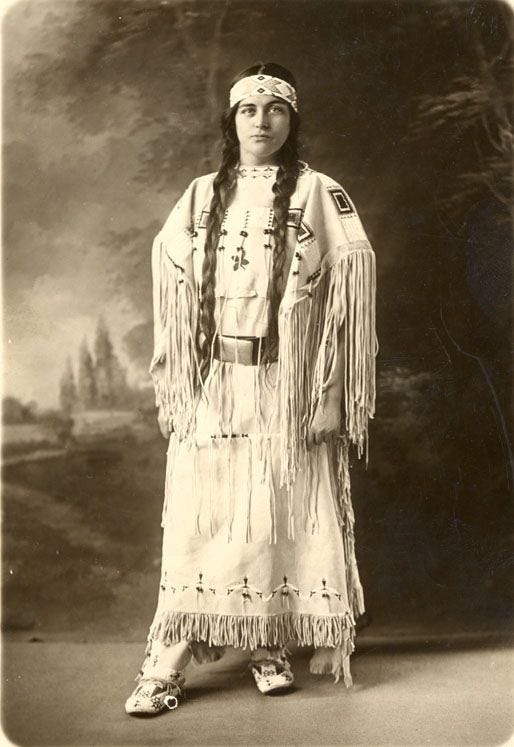
Cherokee People
We mostly know about pre-18th century Native American cultures from records kept by Spanish expeditions. The earliest ones of the mid-16th century encountered peoples of the Mississippian culture era, who were ancestral to tribes that emerged in the Southeast, such as the Cherokee, Muscogee, Cheraw, and Catawba.
In 1540–41, a Spanish expedition led by Hernando de Soto passed through present-day South Carolina, proceeding into western North Carolina and what is considered Cherokee country. The Spanish recorded a Chalaque people as living around the Keowee River, where western North Carolina, South Carolina, and northeastern Georgia meet. The Cherokee consider this area to be part of their homelands, which also extended into southeastern Tennessee,
Further west, De Soto’s expedition visited villages in present-day northwestern Georgia, recording them as ruled at the time by the Coosa chiefdom, which might have been ancestral to the Muscogee Creek people, who developed as a Muskogean-speaking people with a distinct culture.
In 1566, the Juan Pardo expedition traveled from the present-day South Carolina coast into its interior, and into western North Carolina and southeastern Tennessee. He recorded meeting Cherokee-speaking people who visited him while he stayed at the Joara chiefdom. The historic Catawba later lived in this area of the upper Catawba River. Pardo and his forces wintered over at Joara, building Fort San Juan there in 1567.
His expedition proceeded into the interior, noting villages near modern Asheville and other places that are part of the Cherokee homelands. According to anthropologists, the Pardo expedition also recorded encounters with Muskogean-speaking peoples at Chiaha in southeastern modern Tennessee.
Linguistic studies
Linguistic studies have been another way for researchers to study the development of people and their cultures. Unlike most other Native American tribes in the American Southeast at the start of the historic era, the Cherokee and Tuscarora people spoke Iroquoian languages. Since the Great Lakes region was the territory of most Iroquoian-language speakers, scholars have theorized both the Cherokee and Tuscarora migrated south from that region. The Cherokee oral history tradition supports their migration from the Great Lakes.
Which begs a discussion of whether the Cherokee themselves were invaders who took over the lands of other Indians in the pre-history era. Linguistic analysis shows a relatively large difference between Cherokee and the northern Iroquoian languages, suggesting they migrated long ago. Scholars posit a split between the Cherokee and the Iroquios in the distant past, perhaps thousands of years ago. The history of successful civilizations almost always includes some migration and some conquering of whomever was there before the migration.
On the other hand….
In 1657, there was a disturbance in Virginia Colony as the Rechahecrians or Rickahockans, as well as the Siouan Manahoac and Nahyssan, broke through the frontier and settled near the falls of the James River, near present-day Richmond, Virginia. Historians debate the identity of the Rechahecrians, noting the name closely resembled the Eriechronon or Erielhonan, commonly known as the Erie tribe, another Iroquoian-speaking people based south of the Great Lakes in present-day northern Pennsylvania.
Remember what I said about how aggressive the Iroquois were. The Five Nations Iroquois alliance, seeking more hunting grounds to support the beaver trade, drove the Eriechoronon from the Lake Erie area. It didn’t matter they spoke the same language. The Iroquois wanted what the Iroquois wanted. Some anthopologists theorize the Eriechoronon migrated to Virginia during the 17th century and became the Cherokee after the English settlers and their existing Indian allies drove them into the wilderness.
Virginian traders traded with what they called the Cherokee in the Piedmont before the end of the 17th century.
It’s known the Cherokee gave sanctuary to a band of Shawnee in the 1660s. The Shawnee were an Algonquin-speaking tribe, which makes that relationship interesting, but it might be explained by the Iroquios forcing the Cherokee (an Iroquian speaking tribe) out of their ancestral territory, so maybe their allegiances changed. Then, from 1710 to 1715, the Cherokee and Chickasaw allied with the British, and fought the Shawnee, who were allied with French colonists, forcing the Shawnee to move northward where they would become closely allied with the Wendat/Huron—another Iroquioan-speaking, French-allied tribe that had been longtime enemies with the Iroquois.
The Cherokee fought with the Yamasee, Catawba, and British in late 1712 and early 1713 against the Tuscarora in the Second Tuscarora War. The Tuscarora War marked the beginning of a British-Cherokee relationship that remained strong for much of the 18th century, despite occasional disagreements. With the growth of the deerskin trade (the southern version of the beaver skin trade), the Cherokee became valuable trading partners, since deer skins from the cooler country of their mountain hunting-grounds were of better quality than those supplied by the lowland coastal tribes, who were neighbors of the English colonists.
Just like the Alonguian and Iroquios were traditional rivals in the north before contact with Europeans, the Cherokee and Creek were probably rivals before the first European landed. In January 1716, Cherokee murdered a delegation of Muscogee Creek leaders at the town of Tugaloo, marking their entry into the Yamasee War, which ended in 1717 with peace treaties between the colony of South Carolina and the Creek. Not honoring treaties they weren’t a part of, the Cherokee and Creek continued hostilities and sporadic raids for decades following this “peace. These raids came to a head at the Battle of Taliwa in 1755 when the Cherokee defeated the Muscogee.
In 1721, the Cherokee ceded lands in South Carolina. In 1730, at Nikwasi (a Cherokee town and Mississippian culture site), a Scots adventurer, Sir Alexander Cuming, crowned Moytoy of Tellico as “Emperor” of the Cherokee. Moytoy agreed to recognize King George II of Great Britain as the Cherokee protector. Cuming arranged to take seven prominent Cherokee, including Attakullakulla, to London, England, where the Cherokee delegation signed the Treaty of Whitehall with the British. Moytoy’s son, Amo-sgasite (Dreadful Water), attempted to succeed him as “Emperor” in 1741, but the Cherokee elected their own leader, Conocotocko (Old Hop) of Chota.
Political power among the Cherokee remained decentralized, and their approximately 64 towns acted autonomously. Despite their relative anarchy, they were a formidable tribal power, able to field an estimated 6000 men. In 1738 and 1739, smallpox epidemics broke out among the Cherokee, who had no natural resistance to the European infectious disease. Nearly half their population died within a year. Hundreds of other Cherokee committed suicide due to their losses and disfigurement from the disease.
From 1753 to 1755, battles broke out between the Cherokee and Muscogee over disputed hunting grounds in North Georgia. The Cherokee were victorious in the Battle of Taliwa. British soldiers built forts in Cherokee country to defend against the French in the Seven Years’ War, which was fought across Europe and was called the French and Indian War on the North American front. These included Fort Loudoun near Chota on the Tennessee River. Serious misunderstandings arose quickly between the two allies, resulting in the 1760 Anglo-Cherokee War.
In the aftermath of the French and Indian war, French Louisiana east of the Mississippi went to the British, along with Canada, while Louisiana west of the Mississippi went to Spain; in return, Spanish Florida went to Britain, which divided it into East Florida and West Florida.
After the signing of the treaties and the conclusion of the Timberlake Expedition, Henry Timberlake visited London with three Cherokee leaders. The Cherokee guests visited the Tower of London, met the playwright Oliver Goldsmith, drew massive crowds, and had an audience with King George III. On the voyage to England, their interpreter William Shorey died. This made communication nearly impossible.
Hearing of the Cherokees’ warm welcome in London, South Carolinians viewed their reception as a sign of imperial favoritism at the colonists’ expense, especially in view of the Royal Proclamation of 1763 (which prohibited settlement west of the Appalachian Mountains), and was a foundation of one of the major irritants for the colonials leading up to the American Revolution. One wonders if an interpreter could have cleared up any misunderstandings.
You might find How The South Was Won The Final Chapter of The War of Independence, in Three Acts, by Librarian of Celaeno interesting Lela. He discusses southern Indian involvement in and events surrounding the war of 1812: https://librarianofcelaeno.substack.com/p/how-the-south-was-won