Interpreters Needed
Cultural exchanges were vital to the Southern colonies

This series is on the foundations and Founding Fathers of the United States. Follow this link to the first article in the series.
I’ve really been ignoring the Southern colonies, but we do need to understand the forces that shaped men like Thomas Jefferson and George Washington, so let’s get caught up on what they were doing at the same time as the New England and Middle colonies were doing what we’ve just visited.
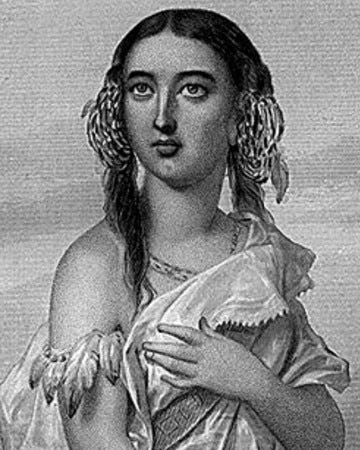
After the founding of Jamestown, the Virginia colony needed to find a way to work with the Powhatan Indians. Afterall, this was the tribe suspected of wiping out the Roanoke colony.
As the Powhatan and English interacted with each other to facilitate trade and diplomacy, the ability to communicate became increasingly important. Both English and Powhatan leaders realized adolescent boys could learn foreign languages and adapt to new situations for more quickly than adults, so they began to swap teens to become interpreters and messengers between the cultures.
English Examples
Of course, not all of these exchanges were by choice, though some likely were. Teen boys like adventures, although there was also the risk of manipulation.
Thomas Savage was a “gift” from Captain Christopher Newport to Powhatan in 1608, in exchange for Powhatan’s servant Namontack, whom Newport took to England and introduced him as the son of “the emperor of Virginia.” Namontack returned to Virginia with greater knowledge of English culture.
Henry Spelman arrived in Virginia in 1609 and was sent to the Powhatan Indians to “ensure the good behaviour” of English settlers living upriver. (Yes, he was a hostage). He lived for over a year with the Patowomeke on the Potomac River, where he was treated as an honored guest (abuse was not guaranteed in these exchanges) while recording his observations of their language and life in his “Relation of Virginea.”
Robert Poole came in 1611 and was assigned to Opechancanough, Powhatan’s brother, as an interpreter in 1614.
Savage and Poole both became wealthy through the Virginia fur trade. Spelman didn’t. These three interpreters are integrally bound to one another.
Henry Spelman
Born in England in 1595, Spelman left his home in Norfolk, England as a 14-year-old indentured servant. Arriving at Jamestown in 1609, Henry soon traveled with Captain John Smith, President of the Virginia Council in Jamestown, on an expedition up the James River to the falls. Due to a food shortage at Jamestown, Smith sent 120-140 colonists to settle near an Indian village called Powhatan, ruled by Parahunt, son of Powhatan, the paramount, or supreme chief, of all the Indians in Tidewater Virginia. When Smith’s expedition arrived, they found the new English settlement had been under constant Indian attacks.
This will happen when you unwisely build your settlement within easy walking distance of a rival settlement. It’s unclear if Smith knew he was encroaching when this first started, but he obviously should have known at the time of this expedition.
When Smith and Parahunt met, Parahunt agreed to move his people in exchange for copper and English protection from the Monacan, their enemies to the west. Smith also left Spelman with Parahunt to learn the Powhatan language. Parahunt treated Henry well, but war soon broke out between the English and the Indians in the Tidewater region. John Smith was injured and returned to England. Henry wanted to return to the English and soon made his way back to Jamestown. He hadn’t been back in Jamestown long when a handful of Powhatan Indians came to the James Fort with venison, accompanied by Thomas Savage, another English boy who had been sent to live with the Indians.
Captain Percy, who was now in charge at Jamestown, told Thomas Savage he had to return with the Indians, but Thomas didn’t want to go back alone. Henry was chosen to accompany Thomas and was eager to do so because Jamestown was suffering a famine and he knew the Indians had food. Henry took a hatchet and some copper with him and gave it to paramount chief Powhatan, which bought the young men some kindly treatment…for a while.
Henry spent a total of about a year and a half with the Indians, learning the Algonquian language and their way of life. He acted as a messenger and interpreter between the Powhatan people and the English, arranging for the two groups to trade with one another. He also witnessed hostilities between them which made him feel uneasy. He had been living with the Indians for several months when a district chief of the Patawomeck, a tribe to the south of the Potomac River, came to visit Powhatan. Henry, Thomas and another boy named Samuel decided to go with him, without telling Powhatan (a serious breach of tribal etiquette). On the journey, Thomas had second thoughts and decided to return to Powhatan. Supreme chief Powhatan sent a message for the other two boys to return. When they refused, one of Powhatan’s men killed Samuel. Afraid for his life, Henry ran away but finally made his way to the Patawomeck. Henry lived with them for about a year. There he moved freely, treated as a special guest, and recording his observations of Powhatan life.
Henry wrote the greatest town of the Powhatan people had about 20 – 30 houses. These houses were made like conical ovens with a small opening for a door. They were spacious inside and had a hole in the roof in the center of the house for smoke to escape from the central hearth. Houses of the chief were broader and longer, with complicated corridors before coming to the room where the chief was. The Powhatan women primarily made the houses out of bent saplings and covered them with mats. The men primarily fished and hunted. In the fall some 200-300 men would join together to hunt communally, particularly up the rivers near the rivers’ fall line, each with bow and arrows and a “fire stick.” They would make a very large circle and set fire to the grass with their “fire sticks.” The deer within the circle would run to a narrow opening in the circle to escape, and here the Indians killed them with their bows and arrows. Henry also wrote about Powhatan weddings, burials, government, planting methods and other activities.
In September 1610, Captain Samuel Argall, an Englishman on a trading mission, found Henry living with the Patawomeck and Argall ransomed Henry back to the English by exchanging some copper. With his knowledge of the Indian language and culture, Henry helped the English trade copper for valuable supplies such as corn. He also helped them form an alliance with these northern Indians to help establish Jamestown as a permanent settlement. Henry now worked as an interpreter for the English, mixing with both English and Powhatan leaders.
Henry made several trips back to England but returned to Virginia to serve as an interpreter, rising to the rank of Captain. In 1619, a rival interpreter, Robert Poole, accused Henry of speaking badly against the Governor to Opechancanough, then the supreme chief of the Powhatan people. If found guilty of treason, Henry could have been executed. Instead, he was found guilty of a lesser crime. He lost his rank of Captain and was sentenced to serve the Governor for seven years as an interpreter.
In 1622 Opechancanough tried to drive the English out of Virginia by attacking the settlers, killing about 330 men, women and children. Henry survived the attacks and was called upon to renew the English alliance with the Powhatan Indians along the Potomac River. The renewed alliance improved English chances for success in the war with Opechancanough.
In the spring of 1623, Henry volunteered to take a group of 19 men north to the Potomac River, away from the fighting near Jamestown, to barter for food. In March 1623 Henry’s party was attacked by 60 canoes full of Indians who weren’t members of any Powhatan tribes. At age 28, after providing much good service as an interpreter, Henry died.
Pocahontas
Although the English hoped to entice the Powhatan to send their children to the English to become acculturated, the Powhatan liked their own culture. Only a small minority lived with settlers and accepted English life. These included Pocahontas, the daughter of the most powerful Indian leader, Powhatan.
Pocahontas first met John Smith in December 1607 when he was captured and brought before her father in his head village at Werowocomoco. Smith wrote Pocahontas rescued him from death, but some historians speculate he was part of a ritual or test Powhatan used to assert his authority over the English in Virginia. As the favorite daughter of the paramount chief, Pocahontas visited Jamestown more than once and interacted with colonists.
In 1613, Pocahontas was kidnapped by the English to ransom English prisoners held by Powhatan. She was taken up the James River to Henrico and taught English customs and religion by the Anglican minister, Alexander Whitaker. She also met John Rolfe, the planter who introduced tobacco as a cash crop in the colony. In 1614, she was baptized with the Christian name Rebecca and married John Rolfe. The following year they had a son, Thomas. During this period there was relative peace between the Powhatan Indians and the English. Pocahontas remained in the English world, traveling to England to promote the English colony, where she died (probably of tuberculosis) in 1617.
Powhatan Examples
Chanco was a young Powhatan male who lived and worked with a settler on the Pamunkey River. He and another unnamed Indian boy who lived with the English both warned the English about the upcoming 1622 Powhatan attack.
As with the English exchanged interpreters, these intermediaries were essential to the diplomacy and trade of the Southern colonies, and yet they were mistrusted by both sides because they were seen as neither English or Indian.
It was an inspired idea, in the vein of Tisquantum, but it wasn’t without its snags because the Americas were a dangerous place undergoing titanic transformation.
There were Jesuits from Cuba that faced Marterdom by an Interpeter from a Indian Tribe. The Interpreter was trained and sent to England to learn the X'itans way of life. After returning to the Jamestown Colony and returning to an unwholesome life, he was admonished and it was the primary reason he turned the Indian Tribe against the Jesuits who the perished.