King George's War
European conflict visits North America - Again!

This is series is on the foundations and Founding Fathers of the United States. Follow this link to the first article in the series.
Okay, so we’re back to a more wide-picture view with King George’s War (1744-1748). This was part of the War of the Austrian Succession (1740-1748), fought primarily in Europe and on the seas. Its immediate cause was the right of Maria Theresa to inherit Austria, which was opposed by a coalition of France, Prussia, and Bavaria, while Maria Theresa was backed by Great Britain, the Dutch Republic, and Hanover, collectively known as the Pragmatic Allies. It became something like a world war by the end of it.
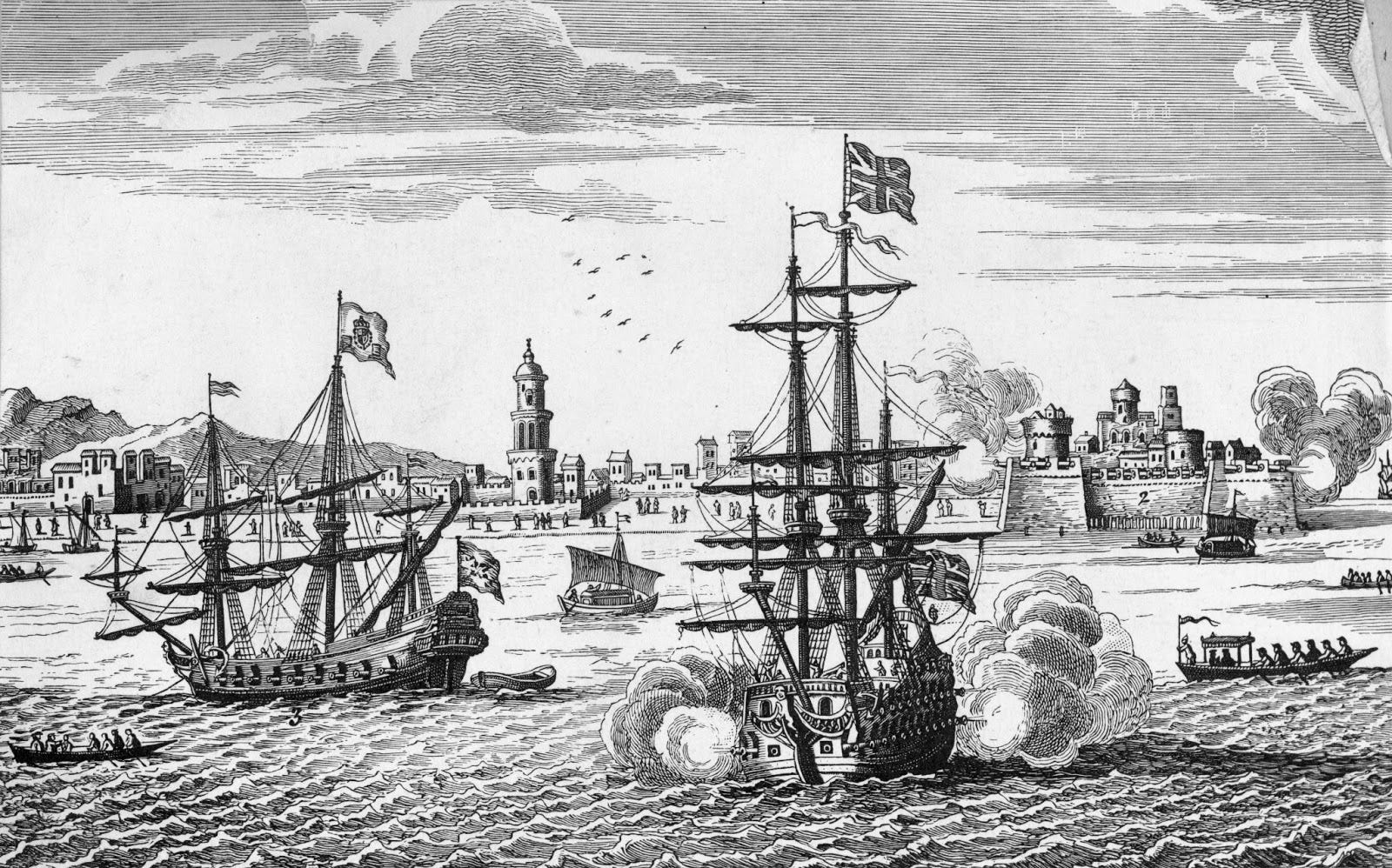
Fighting began when Prussia occupied the wealthy Austrian province of Silesia in December 1740. Neither side achieve a decisive victory and the cost of the war and a crippling British naval blockade almost bankrupted France, leading to the Treaty of Aix-la-Chapelle which confirmed Maria Theresa in her title. Still, many signatories were unhappy with the terms. In return for vast expenditure, France gained very little, while the British insistence Austria cede Silesia to Prussia as part of the peace undermined the long-standing Anglo-Austrian Alliance. This led to the realignment known as the Diplomatic Revolution, leading to the outbreak of the Seven Years’ War in 1756.
North America
King George’s War (1744–1748) encompassed the North American military operations that were part of this European war. It was the third of the four French and Indian Wars, taking place in New York, Massachusetts Bay (which included Maine), New Hampshire (which included Vermont), and Nova Scotia. Its most significant action was an expedition organized by Massachusetts Governor William Shirley leading to the ultimate capture of Cape Breton.
News of war declarations reached the French in America first, and their forces wasted little time in beginning hostilities. Concerned about their overland supply lines to Quebec, they raided the British fishing port of Canso on May 23, and then organized an attack on Annapolis Royal, the capital of Nova Scotia. French forces were delayed in departing Louisbourg, and their Mi’kmaq and Maliseet allies, together with Father Jean-Louis Le Loutre, decided to attack on their own at Fort Anne in early July.
By that time, Annapolis received news of the war declaration, and the British forces were somewhat prepared when the warriors began besieging Fort Anne. Lacking heavy weapons, the Mi’kmaq and Maliseet withdrew after a few days. Then, in mid-August, a larger French force arrived at Fort Anne, but it was also unable to mount an effective attack or siege against the garrison because the fort had received supplies and reinforcements from Massachusetts.
In 1745, British colonial forces captured Fortress Louisbourg on Cape Breton after a siege of six weeks. In retaliation, the Wabanaki Confederacy of Acadia launched the Northeast Coast Campaign (1745) against the British settlements on the border of Acadia in northeast Maine. France launched a major expedition to recover Louisbourg in 1746. Beset by storms, disease, and finally the death of its commander, the expedition’s survivors returned to France in tatters without reaching its objective.
The war was also fought on the frontiers between the northern British colonies and New France. Each side had allies among the Native Americans, and outlying villages were raided and captives taken for ransom, or sometimes adoption by Native American tribes who had suffered losses to disease or warfare. As a result of the frequent raiding on the northern frontier, Governor William Shirley ordered the construction of a chain of frontier outposts stretching west to its border with New York.
In November 1745, the French and their Indian allies raided and destroyed the village of Saratoga, New York, killing or capturing more than one hundred of its inhabitants caushing the English to abandon their settlements in New York north of Albany, a major trading city. In July 1746 an Iroquois and French force assembled in northern New York for an attack against British forces. When the expected British regulars never arrived, the attack was called off.
In 1746, a large French and Indian force mustered to raid in the upper Hudson River Valley in retaliation for the death of an Indian leader in an earlier skirmish. Instead, they raided in the Hoosac River Valley, including an attack on Fort Massachusetts (at present-day North Adams, Massachusetts). Other raids included the 1747 French and Mi’kmaq raid on Grand Pré, Nova Scotia; and the 1748 Indian raid of Schenectady, New York.
If you want to know why, as the New England settlers moved west, they loathed the Indian tribes they met…yeah. Guilt by association.
Aftermath
The war took a heavy toll, especially in the northern British colonies. It’s estimated Massachusetts lost 8% of its adult male population.
According to the Treaty of Aix-la-Chapelle, Louisbourg was returned to France three years late. This decision outraged New Englanders, particularly Massachusetts colonists who had contributed the most money and personnel to the expedition. The British government eventually acknowledged Massachusetts’ effort with a payment of £180,000 after the war. The province used this money to retire its devalued paper currency.
Some New Englanders might have felt that was a lot too little, a little too late.
The peace treaty, which restored all colonial borders to their pre-war status, did little to end the lingering enmity between France, Britain, and their respective colonies and allies, nor did it resolve any territorial disputes. Tensions remained in both North America and Europe. Tensions turned to open hostility again in 1754, with the start of the French and Indian War, the North American arena for the Seven Years’ War.
Once again, Europe’s petty wars of dynastic in-fighting brought war to the shores of North America as the interests of states and mercantile elites mattered more than the safety or liberty of the settlers. A century after coming to North America, English settlers were developing their wn worldviews that weren’t appreciated by their European overlords. Classical liberal thinkers at the time argued war allows governments to expand their power through increased spending and debt, which siphons off resources from the private sector.
King George’s War illustrated the tension between the colonists’ desire for self-determination and their reliance on British military protection. The capture of the French fortress of Louisbourg in 1745, while a victory for the colonists, is viewed as part of an ongoing, costly, and unnecessary series of intercolonial conflicts bringing little long-term value to the ordinary person.
The era was characterized by a lack of strong central control of colonies from their European overlords. While that allowed for a degree of freedom few in Europe enjoyed, it meant English colonists were continuously threatened by the mercantilist policies of the British Empire.
Moreover, the heavy debt incurred by Britain during this and subsequent conflicts led directly to increased taxation on the colonies, which, in turn, fueled the libertarian/classical liberal ideals of the American Revolution.